Rail Career Guide Series
Subway & Metro Train Operator Career Guide
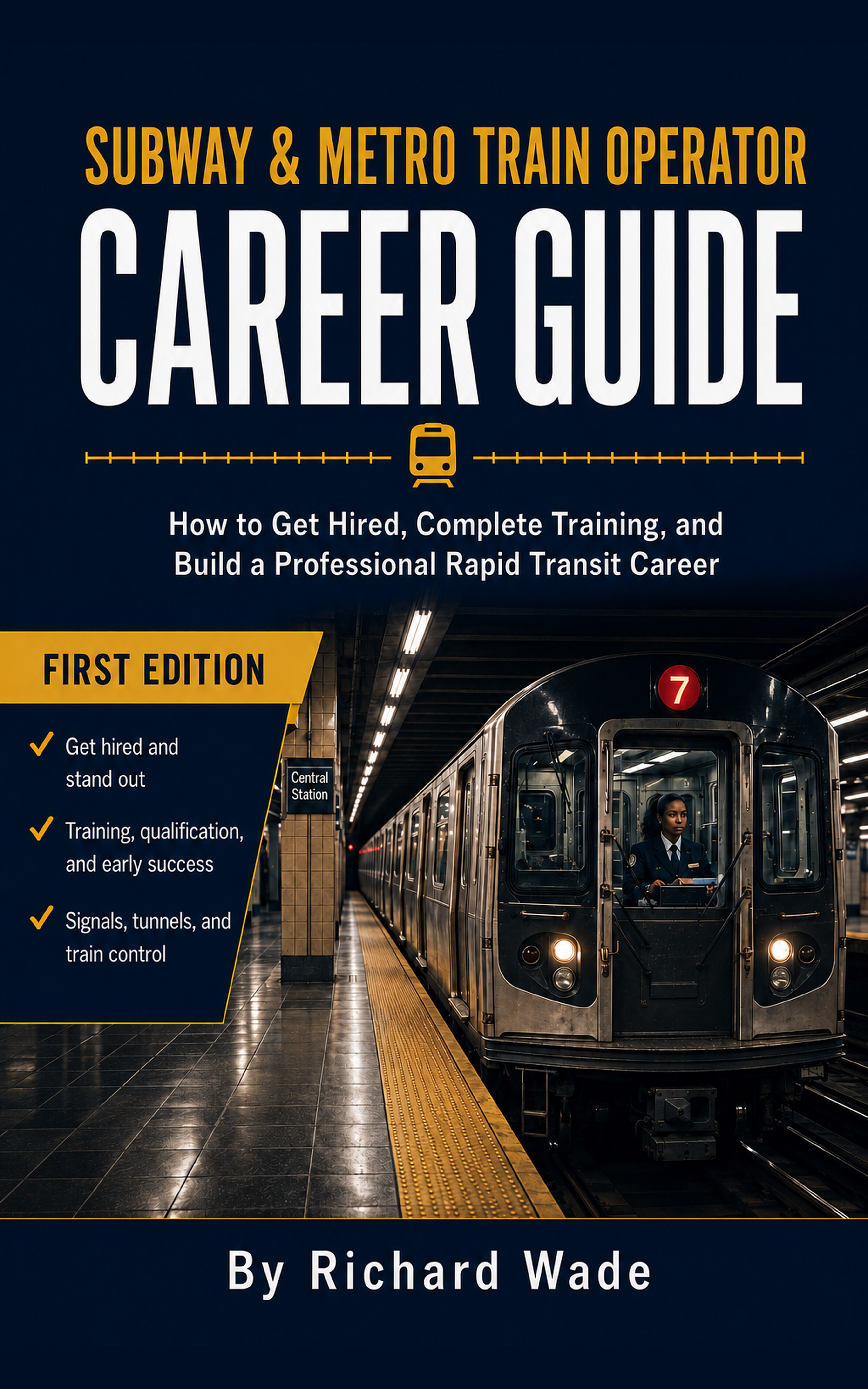
How to Get Hired, Complete Training, and Build a Professional Rapid Transit Career
By Richard Wade
A practical introduction to pursuing, preparing for, and developing a professional career in subway and metro train operations.
- Published
- July 21, 2026
Build a career beneath the city.Build a career beneath the city.
From the platform, subway service can look automatic and predictable. Behind the cab door, the operator works inside a tightly coordinated railway shaped by signals, route settings, train-control equipment, platform conditions, traction power, station spacing, service regulation, and constant communication with control.
This guide opens that normally hidden working world. It explains the realities of report time, yards, terminals, door problems, congestion, overnight service, extra-board life, and repetitive territory where professional attention must remain high even when the route feels familiar.
Readers receive a career-level introduction to steel-wheel physics, train construction, track and structures, switches and interlockings, third rail and overhead power, braking, accurate station stops, fixed blocks, cab signals, automatic train protection, CBTC, platforms, tunnels, disabled trains, and emergency environments.
The second half turns toward employment and qualification: system research, civil-service and direct-hire processes, interviews, assessments, classroom instruction, route study, check rides, radio communication, reports, investigations, and the habits that protect a first-year career.
“The route may be familiar while the condition is new.”
— Richard Wade, Subway & Metro Train Operator Career Guide
Practical coverage
What the guide covers
- 01What subway and metro operators do beyond the public portion of a trip
- 02How trains, track, tunnels, stations, traction power, switches, and interlockings fit together
- 03The purpose of signals, blocks, automatic protection, CBTC, and movement authority
- 04How civil-service exams, interviews, training, route qualification, and check rides may work
- 05A 30-day study framework plus first-year readiness and career-protection tools
Who it’s for
Career explorers, transit applicants, trainees, and transportation professionals interested in subway and metro rail operations.
NextStop Training And Consulting LLC
Written From Real Transportation Experience
Richard Wade’s experience includes serving as a bus operator, light-rail operator, trainer, rail supervisor, and assistant manager of rail operations. His transportation education and consulting work is organized through NextStop Training And Consulting LLC.
Continue the journey
Ready to explore?
From the collection