Rail Career Guide Series
New releasePassenger Rail Operator Career Guide
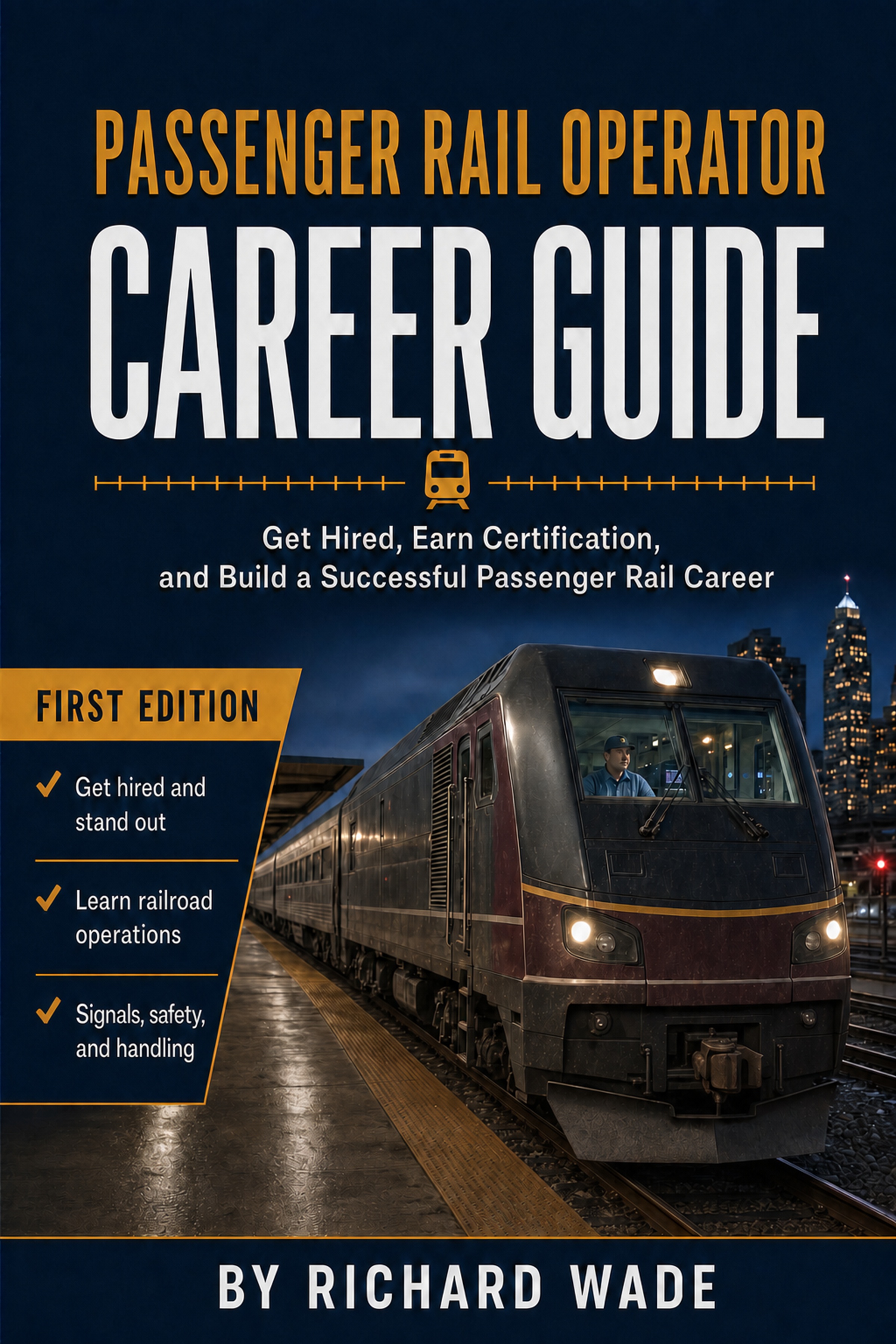
Get Hired, Earn Certification, and Build a Successful Passenger Rail Career
By Richard Wade
A comprehensive career guide to commuter, regional, intercity, long-distance, high-speed, and excursion passenger rail—covering the hiring process, federal certification, train handling, signals, crew coordination, and the professional habits that protect a railroad career.
- Published
- July 24, 2026
- Length
- 33 chapters · 8 appendices
Prepare for the responsibility of moving people on the mainline railroad.Prepare for the responsibility of moving people on the mainline railroad.
Passenger rail shares steel wheels, track, signals, and operating rules with the larger railroad industry, but the work carries a distinctive responsibility: every movement decision affects passengers, crewmembers, stations, connections, and the public. This guide explains what that responsibility looks like from the first application through qualification and the first year on the job.
Readers compare commuter, regional, intercity, long-distance, high-speed, and excursion services before examining the roles of locomotive engineers, conductors, assistant conductors, host railroads, public authorities, private operators, and contractors. The book also explains why passenger trains may share corridors with freight traffic and how dispatching, meets, passes, maintenance windows, and delay management shape daily service.
Technical chapters introduce locomotives, cab cars, multiple units, air brakes, train forces, inspections, head-end power, doors, accessibility, track territory, interlockings, operating rules, wayside and cab signals, movement authorities, Positive Train Control, grade crossings, station approaches, platform spotting, disabled trains, emergencies, and evacuation.
Career chapters focus on applications, background reviews, interviews, assessments, seniority, extra boards, unions, Railroad Retirement, rulebook study, territory qualification, crew resource management, de-escalation, reports, investigations, fatigue, vigilance, and advancement into supervision and operations management.
Case studies introduce major commuter-rail environments, Amtrak, private passenger service, Portland-area WES, and tourist or excursion operations while keeping agency-specific rules separate from the general principles readers can carry into employer training.
Practical coverage
What the guide covers
- 01How commuter, regional, intercity, long-distance, high-speed, and excursion passenger services differ
- 02What locomotive engineers, conductors, assistant conductors, dispatchers, and host railroads contribute to safe service
- 03How federal certification, medical fitness, background reviews, interviews, training, and qualification may work
- 04The fundamentals of train handling, air brakes, signals, track authority, Positive Train Control, station approaches, and emergencies
- 05How seniority, extra boards, fatigue, investigations, professional reports, and first-year decisions affect a railroad career
- 06A 30-day study plan, application workbook, employer-comparison tools, territory template, readiness checklist, recruiter questions, and glossary
Who it’s for
Passenger-rail applicants, locomotive-engineer and conductor candidates, railroad trainees, transit professionals considering mainline rail, career changers, workforce programs, and readers comparing commuter, Amtrak, private, or excursion-rail opportunities.
NextStop Training And Consulting LLC
Written From Real Transportation Experience
Richard Wade’s experience includes serving as a bus operator, light-rail operator, trainer, rail supervisor, and assistant manager of rail operations. His transportation education and consulting work is organized through NextStop Training And Consulting LLC.
Continue the journey
Ready to explore?
From the collection